Wills, Trusts, and Probate in Utah: What’s the Difference?
Who receives your home, your savings, and all your personal property when you're not here anymore? It's not exactly a pleasant conversation, but a lot of Utah families just... don't think about it. And honestly, how the legal stuff works can completely change what happens to everything you've built.
Here's something important: according to Utah legal resources, if your estate includes real estate or is worth more than $100,000, it must go through probate—and yeah, that's true even if you have a will. Probate is basically the formal court process that pays your debts and divides up your property with the state watching over- and sometimes controlling- everything. This is exactly why planning ahead actually matters so much for families.
Wills, trusts, and probate are the big three when it comes to protecting what you've built and making things easier for the people you leave behind in Utah and throughout the United States. A solid will or trust can save your family from unnecessary stress and cut down on how long they're stuck dealing with courts. LegacyGuard Legal offers practical, tailored assistance with wills, trusts, and probate planning that fits the unique circumstances of each of their clients. Understanding their options empowers families to make smarter choices that protect your legacy.
How Wills, Trusts, and Probate Work in Utah
Good planning brings clarity. A will and trust attorney, sometimes referred to as an estate and trust attorney or attorney for wills, can guide you through the various options you have so your wishes are followed and your family has less stress and more options.
The Core Tools
Will: A document that says who gets your property and names an executor, known as a personal representative. If you have minor children, it names their guardian.
Trust: It is a legal entity that holds assets as a fiduciary to safeguard the interests of the beneficiaries, thereby eliminating the need for Probate. Think of it as a legal bucket. Whatever is in that bucket does not have to go through probate.
Probate: A court process to verify a Will and supervise Estate Administration. However, if you use a Trust properly, you can generally avoid having to go through probate entirely.
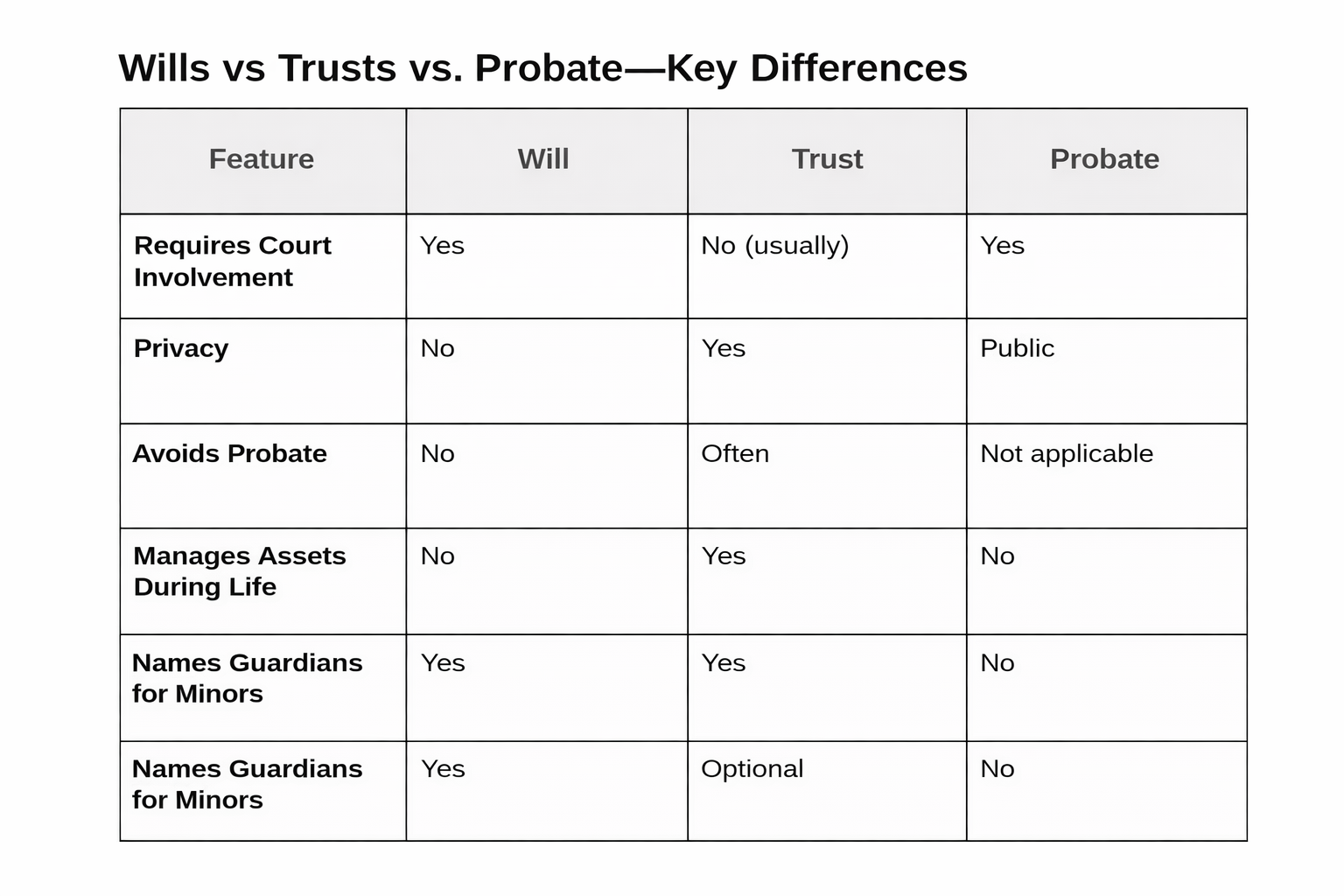
A will goes through probate and becomes part of public record. A trust often avoids probate if properly funded and keeps details private. A trust can hold assets during life and after death.
What a Will Does
A will is a written instruction about your property and care decisions.
Will Basics
Directs who gets your property
Names your executor
Appoints guardian for minor children
In Utah, a will must go through probate to take effect. If you pass away without a valid will, state “intestacy” (passing away without a will) rules decide who receives your property and even who will raise your children.
What a Trust Does
A trust acts as a legal bucket, and holds your assets for the people you choose according to the terms you want.
Trust Benefits
Avoids probate for assets inside the trust
Keeps your legacy plan private
Lets a “Trustee” manage those assets if you’re unable to
Can protect beneficiaries with special needs, such as those with a disability or minor children
Trusts work best when you transfer property into them while you’re alive. Even then, we use a “pour-over will” to back up your trust and catch any overlooked property.
How Probate Works in Utah
Probate is the legal process where a court:
Confirms the will’s validity
Pays debts and taxes
Distributes assets to heirs
In Utah, probate is required if the estate includes any real property or where an estate is valued above $100,000. There are simplified options for smaller estates under certain thresholds.
Common Questions About Wills, Trusts, and Probate
Do I still need a will if I have a trust?
Yep, you really do. We use a special type of will when we use a trust in your estate planning. A will covers anything you forgot to put in the trust, and—this is important—it's where you name guardians for your minor kids. The trust doesn't handle that part.
Will everything in my trust avoid probate?
Usually, yes—but only if you actually retitle or transfer your assets into the trust. Anything you leave outside the trust might still end up going through probate, which is exactly what you're trying to avoid. When we use a trust, we put in several safeguards to try to minimize the chance of this happening.
Is probate really that expensive and slow?
It can be. Probate can drag on anywhere from several months to years, and you're looking at court fees plus attorney costs piling up the whole time. The good news? Trusts can help you avoid many of those delays and expenses.
When's the right time to start planning?
Earlier than most people think. Once you own property, have some savings, or have a family counting on you, it's time to establish an estate plan. Working with an estate and trust attorney now means you're covered should anything unexpected happen.
Can I change my will or trust if things change later?
Absolutely! Life changes quickly: marriage, divorce, the birth of a new baby, or buying a house—your estate plan must reflect these events and continue being relevant. Utah wills and trusts attorneys at LegacyGuard Legal can provide invaluable help when revising or updating a will or trust to make it relevant and suitable to how life unfolds today.
What if I have a trust from out of state. Should I revise it?
Probably. While estate planning documents can be recognized outside of the state they were drafted for, conflicts of law can arise. These conflicts can lead to expensive court hearings and disputes. We generally recommend that if you’ve relocated to another state, that you have estate planning documents that follow that state’s laws, court rules, and regulations.
Conclusion: Protect Your Family and Legacy
Understanding wills, trusts, and probate helps you protect what matters most. LegacyGuard Legal guides you through wills, trusts, and probate, trust & will estate planning and all the various legal requirements in Utah. Talk to one of our will and living trust attorneys today to shape your plan. One of our skilled attorneys for Utah wills or living trusts makes sure your estate planning documents match your goals and comply with the Utah law.
Visit LegacyGuard Legal for personalized help with wills, trusts, and probate planning, and get your estate plan in place so your family has peace of mind now, and clarity and support later.
